
· Create a tech pack initially. Factories offer prices based on what you show them.
· Tennis skirt fabric is typically 85/15 to 88/12 polyester and spandex, with a weight of 150 to 200 gsm.
· Check the materials for ISO 9001, amfori BSCI, or WRAP audits, or for OEKO-TEX Standard 100 for fabrics.
· The standard MOQ is 300/500 per style and color. FOB prices are approximately USD 6 – 15.
· Request sample rounds and/or third-party inspection prior to ordering a balance payment.
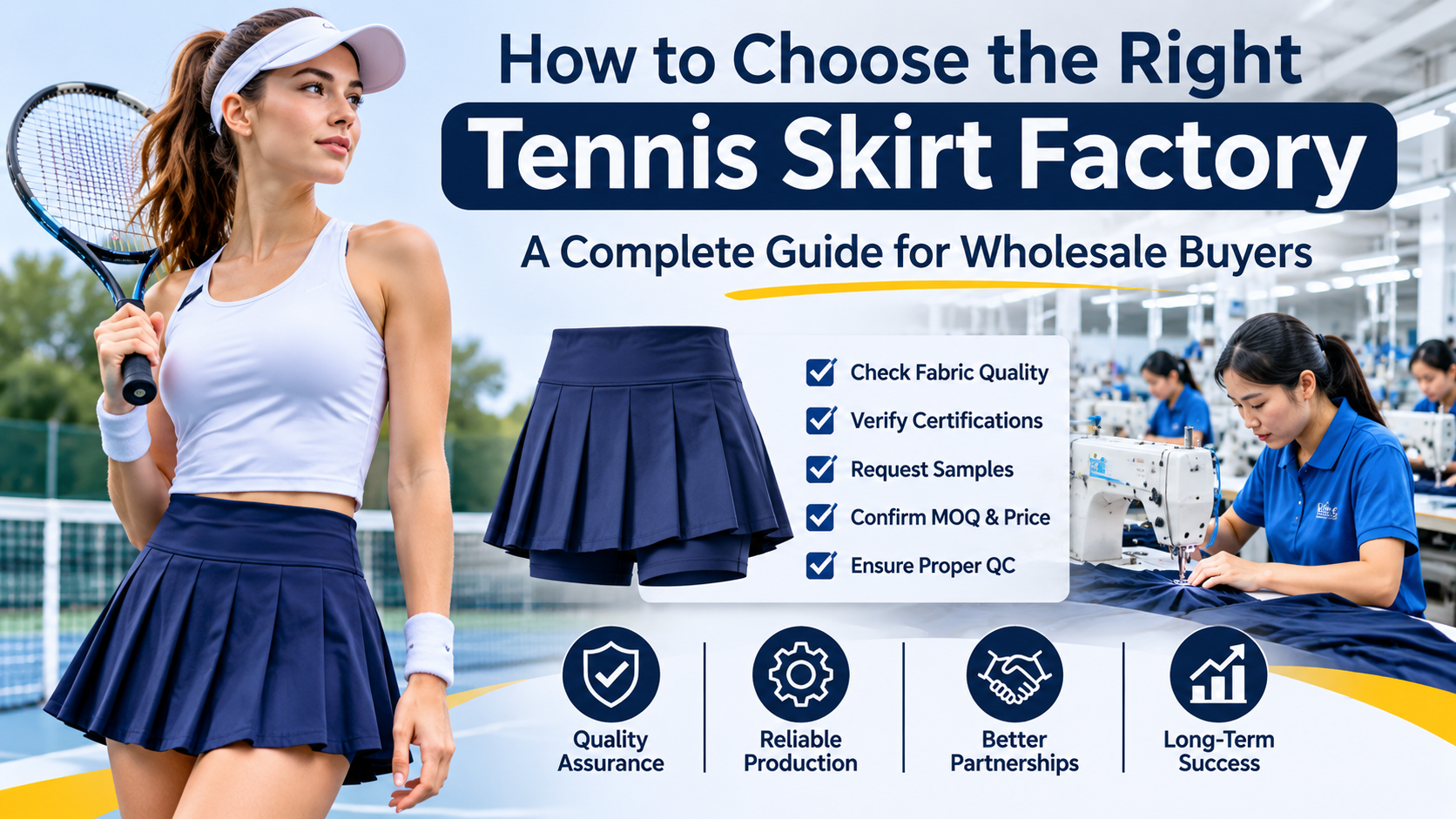
The problem with most tennis skirts is not the design; it's the factory. After 2 washes, the pleats lose their shape. The built-in shorts ride up. The size run does not match the fit model. Most of this is prevented with a better factory choice. How to shortlist, test, and approve a supplier for a brand that sells to actual players!
Create a tech pack for all styles before making any inquiries. It should include fabric weight, composition, skirt length, short length, width, and waistband size. A typical skort is 33 to 40cm long, with elastic at the waistband measuring 3 to 4cm. Include colors, labels, and packing information. Vague briefs get vague quotes. A factory taking in sketches and a mood board will estimate the price, then re-quote once sampling. A tech pack is a tool that allows you to make a comparison among three quotes. It also depicts those factories that ask smart questions! Good ones push back on unrealistic specs early.
Most tennis skirts are made of polyester-spandex knit fabric, typically 85/15 or 88/12 knitting, at 150 to 200 gsm. Interlock and double knitting provide opacity and shape. In terms of outdoor courts, they should consider a moisture-wicking finish and UPF 50+.
The first test is pleats; heat-set pleats should stay crisp after 20 home washes. Cheap factories pleat once, and there is a possibility of failure. Request a sample to be washed. Check stitching, as well. Inside shorts should be flatlocked to prevent chafing, and the stitch density should be around 10–12 stitches per inch.
Fit details also matter. Make sure that the shorts are secured with a silicone gripper or an elastic leg hem for the serve. The two standard tennis balls should not slide out of ball pockets. Waistbands should recover so they bounce back into place after being stretched. Wait until you press each point on the sample to approve anything.
You will have to pick either a full package factory or a cut-and-sew shop. Full package suppliers provide all knitting, dyeing, cutting, and sewing jobs in one place. This reduces turnaround time and troubleshooting. Once more, cut-and-sew factories add another fabric source, another layer of intermediaries, and another quality filter.
See the floor in person or on a video. Count sewing machines and ask about the percentage of flatlocks and overlocks. Typically, a tennis skirt factory, with 150-300 laborers and a specific testing room, can process 300- 500-piece runs without difficulty. Ensure the pattern-making crew knows how to grade sizes for themselves from XS to XL.
Request ISO 9001 quality management and an amfori BSCI/WRAP/SA8000 social audit. Fabrics must meet the requirements of the OEKO-TEX Standard 100. Visit each certificate number online and get the expiration date.
Consider three rounds of samples. The first one is a proto sample, made in the plain fabric to test pattern and fit. It takes 7 to 14 days and costs about USD 50 to 150. The second is made with real fabric and trims. The third one is the pre-production sample, and that's the one you will use as your benchmark for the bulk order. Record all the scores. Compare each sample with your tech pack, and write down any differences as disagreements. Having factories that resolve problems twice is worth the while. The supplier who takes four times around the machine to produce a waistband right is not achieving this quicker by running 3,000 units down the line.
MOQ is at least 300-500 pieces per style/color. A few factories will supply it for a surcharge of 100-200 or on stock fabric. The retail price is usually USD 6-15 per skirt and varies depending on the fabric, print, and trims. The cost of sublimation printing on top is $1-3 USD. If it falls at or below USD 5, it means the fabric is lighter.
Timing is in the patterns. Sourcing fabric takes 7-15 days. The time for bulk production is 30 to 45 days after sample approval. Sea shipment takes an additional seven to 10 days and air shipment an additional three to 5 days. Request a written timetable of dates for cutting, sewing, or check-up, and then discuss the actual progress.
Conduct lab testing on a bulk sample instead of just the pre-production piece. Standard tests include colorfastness to washing (ISO 105-C06), Rubbing (ISO 105-X12), and resistance to pilling (ISO 12945-2). Dimensional change after washing would be less than ±3%. UPF claims must be tested according to AS/NZS 4399 or an equivalent test.
On-site inspection includes artistry. Apply AQL 2.5 for major defects and AQL 4.0 for minor ones in accordance with ISO 2859-1. A sample of 200 at general level II is required for a lot size of between 3,201 and 10,000 pieces. The cost of a third-party inspector is approximately USD 250 to 350 per day. Release the balance when you have read the report.
Request a business license, audit reports, and 2 buyers' references. Send samples to get paid, a small trial order of 300 before scaling, visit or video the floor beforehand.
A fast response rate indicates production behavior. If the delivery is delayed, the factory that can answer code questions in four days will not be going quickly. Seek out a merchandiser who speaks your language and who gives you updates regularly, with images. Do obtain one in advance prior to commitment. The payment consists of a 30% deposit and 70% balance after the inspection report & bill of lading. Avoid 100% upfront. Consider contractually specifying defect limits, delivery dates, and lack-of-delivery penalties. There are several brands that have a provision to accept 3%-5% a week in an unapproved delay.
If a factory won't let you have audits or provide certificates, walk away. When samples are significantly superior to the production run or when the price is much lower than other competitive offers, watch out. Losing the lot numbers, imprecise fabric details, and pressure to pay everything at once are red flags. A good manufacturer is happy to answer questions and provide test reports without asking for any retorts.
The right tennis skirt factory will back up their statements with paper and in their sewing shop. Secure a good tech pack and send the 3 suppliers' samples for testwork and compare with specs. Check research, lab tests, and communication skills before you make a deposit. Test a small number, but scale up production if the quality is good throughout the entire run.
Purchase from a tennis skirt factory with MOQ of 300 – 500 pieces, XS to XL size runs, and retail-ready packaging.
Prices for wholesale FOB orders are generally USD 6-USD 15 per skirt, subject to the fabric and print of the order, as well as order volume.
Choose a factory that offers two in-house copies, custom prints, and progressively lower prices for orders over 1,000 units.
Choose a full-package factory with designs currently on the line and running private label collections as well.
Highlights
READ FULLHighlights Fit is more important than styling whe
READ FULL

Have a question or need a quote? Fill out this form and our team will get back to you quickly!


